What Types of Clinic Potlights Do We Install?
Operatories, exam rooms, waiting rooms and reception desks each need a different fixture and colour temperature. Picking the wrong one is how you end up with hygienist eye strain, shade-matching errors or waiting-room anxiety. Here’s what we install most for potlight installation in Toronto dental and medical clinic fit-outs.
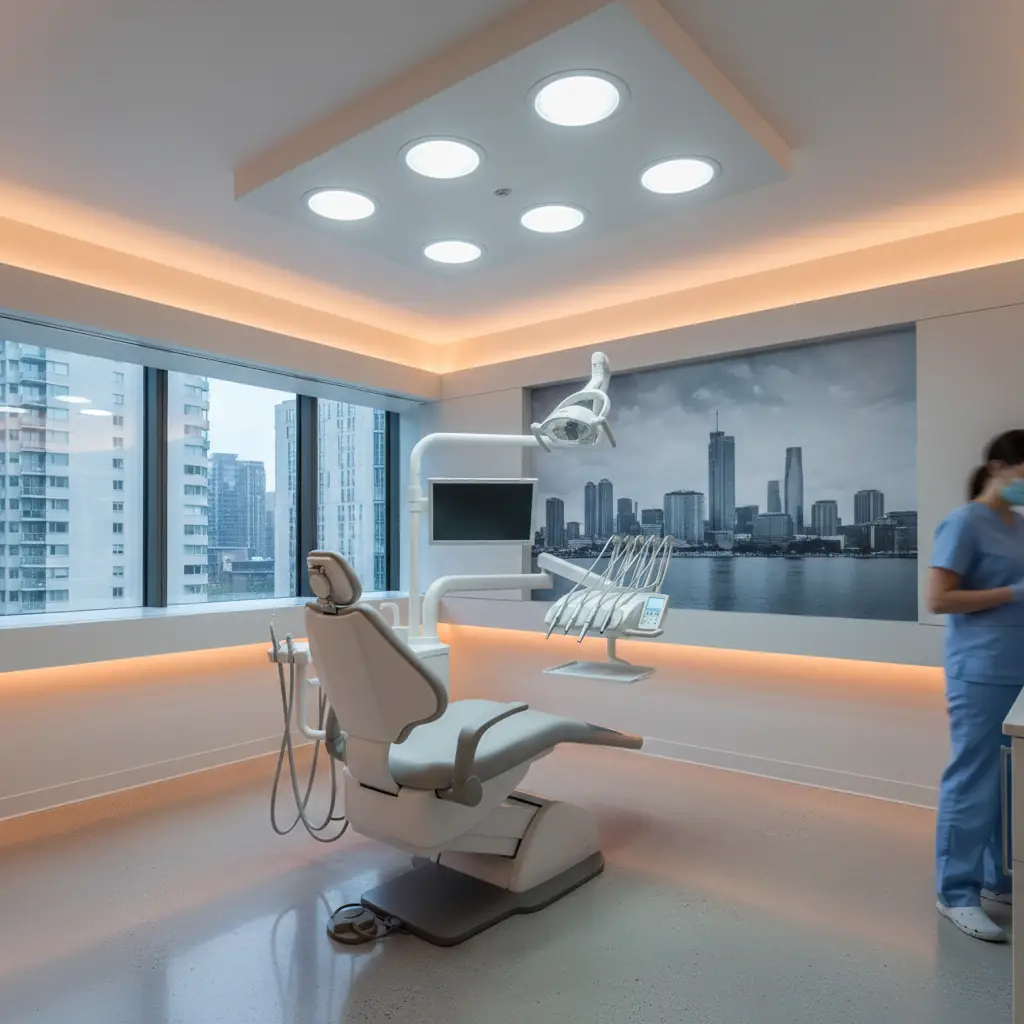
CRI 95+ tunable 4-inch LED potlights for operatories
The non-negotiable for operatory ceilings. Thin canless wafers with 95+ CRI render tooth and tissue colour accurate under the chair. Tunable 2700K to 5700K from Lutron Vive wall plates means the hygienist sets 5000K for scaling and the dentist shifts to 5700K for composite shade matching, from the same fixture.
Low-flicker driver 4-inch LEDs for exam rooms
Medical exam rooms need the same CRI 95+ but with slightly warmer 4000K bias and ultra-low flicker rated under 5 percent across the full dimming range. We spec medical-grade drivers from Satco Starfish and Juno that meet IEEE 1789 recommended practice for healthcare workspaces.
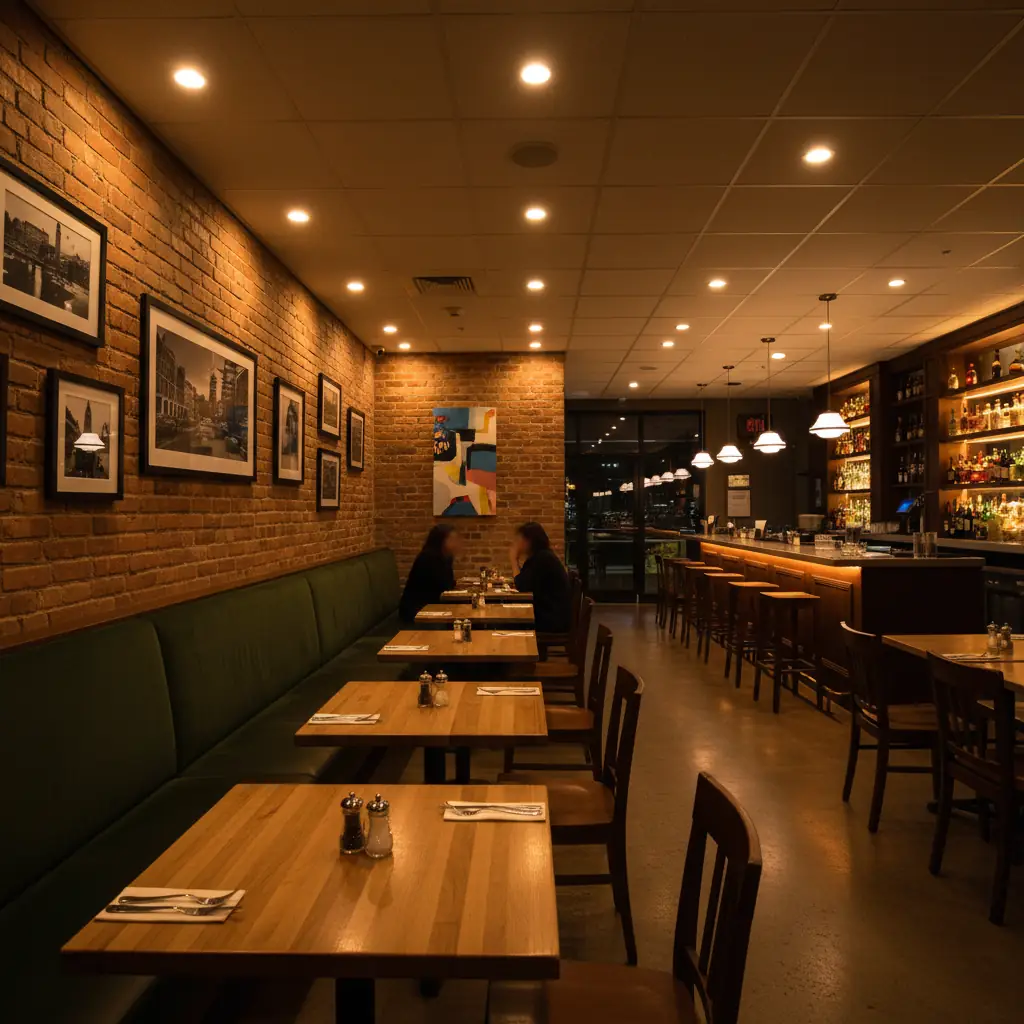
Warm 3000K diffused LEDs for waiting rooms
Patient waiting rooms calm with warm 3000K at 90 CRI, dimmed to about 50 percent. We swap old 4000K recessed troffers for diffused frosted-lens LEDs that soften shadows on faces, which measurably reduces patient-reported anxiety on satisfaction surveys.
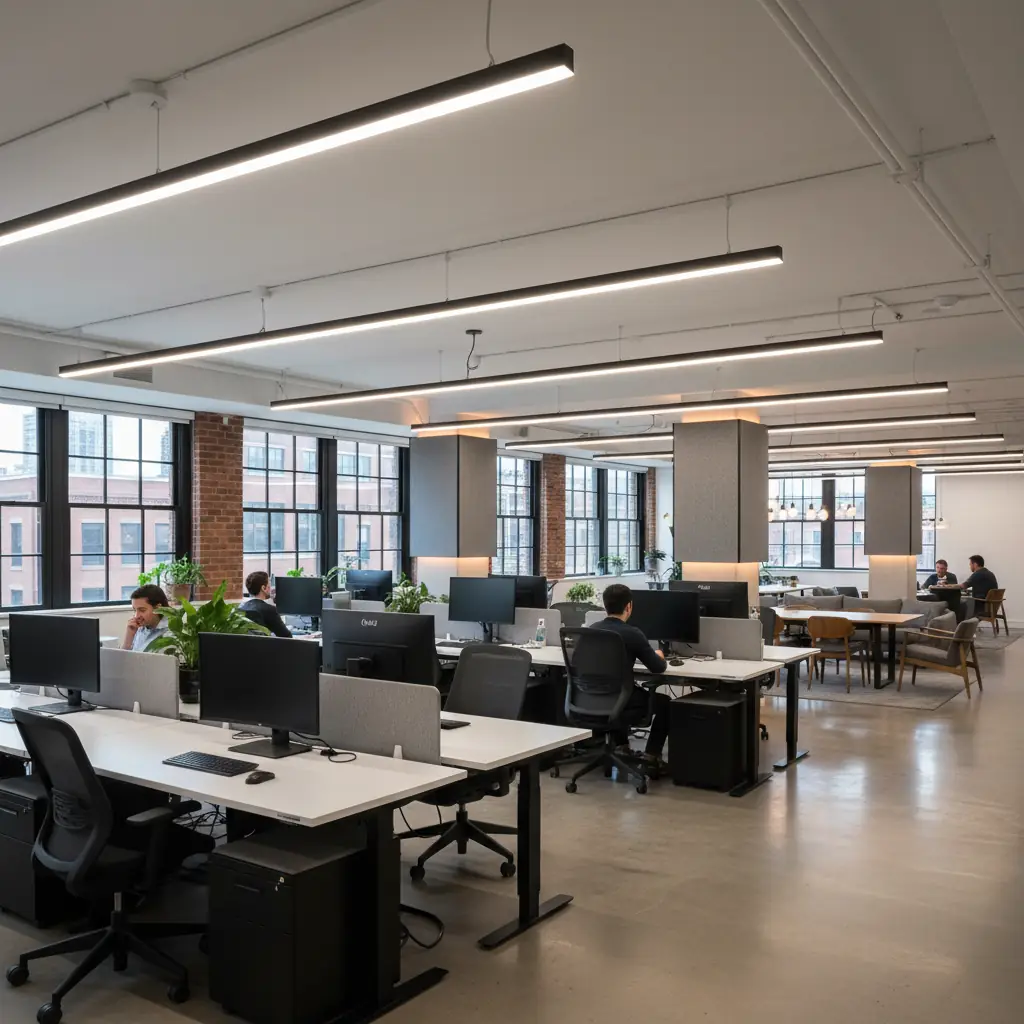
3500K reception and hallway potlights
Reception and clinical hallways sit between relaxed waiting and clinical operatory, so 3500K is the sweet spot. Tunable fixtures let your front desk shift lighter in the morning and warmer by late afternoon, which keeps staff alert without clinical glare on patients walking in.
How Much Does Clinic Potlight Installation Cost in Toronto?
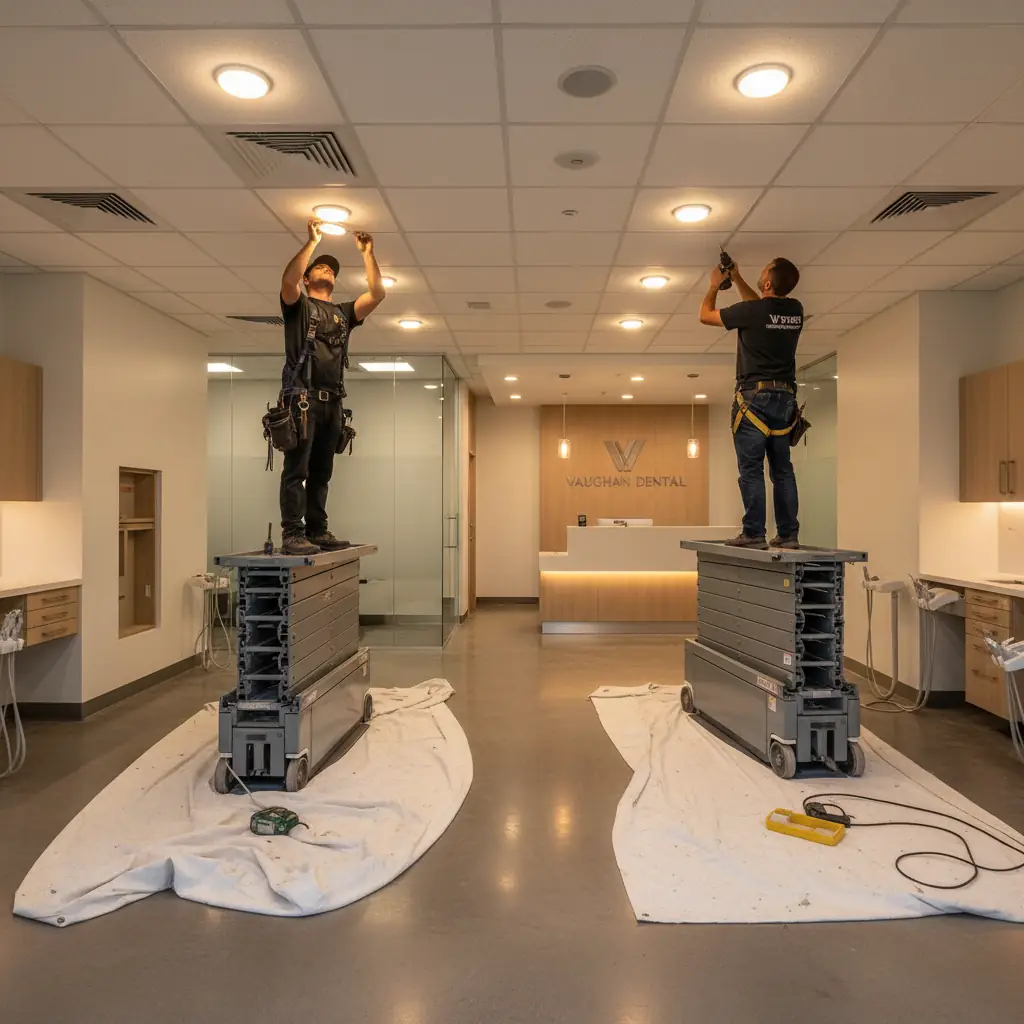
Our clinic pricing is all-in: CRI 95+ fixtures, weekend labour, Lutron Vive zoning, ESA notification and the drywall patch on any removed fluorescents. Here’s what moves the number up or down.
| Cost factor | Lower end | Higher end |
|---|---|---|
| Operatory count | 4 to 6 chairs, from $3,200 | 14 to 18 chairs, up to $14,800 |
| Ceiling type | Suspended T-bar troffer swap | Finished drywall or heritage plaster |
| Zoning | Single Lutron Vive clinic zone | Zone per operatory plus shared areas |
| Fixture grade | Standard CRI 95+ tunable | Medical-grade low-flicker driver premium |
| Install window | Long weekend or statutory holiday | Standard Friday-close to Monday-open |
Older North York and Scarborough medical plazas with suspended T-bar ceilings are actually cheaper to retrofit than drywall clinics because we swap troffer-for-troffer without ceiling cutting. Heritage conversion clinics in old downtown houses need slower, dust-controlled plaster work and run 15 to 20 percent higher.
When Is It Time to Retrofit Your Clinic Lighting?
Most clinic owners call us for one of four reasons. First, hygienists are reporting eye strain or headaches after shift and the old 4000K fluorescents are the suspected cause. Second, composite colour matching keeps getting flagged on quality checks and the lighting is wrong CRI for shade work. Third, a renovation added new chairs or a second treatment room and the old ceiling layout doesn’t fit the new workflow. Fourth, the clinic is being sold or valuations are coming up, and buyers compare clinical infrastructure directly.
Long weekends and statutory holiday periods are our busiest clinic install windows. If you want Victoria Day, Canada Day, Labour Day or Thanksgiving long weekends specifically, book the walkthrough three to four weeks ahead.
Common Clinic Lighting Problems We Fix
Composite shade matching errors
Standard 80 CRI operatory lights make A2 composite look slightly different from the natural tooth beside it on resin cure. CRI 95+ at 5700K renders both samples with 95 percent colour accuracy versus daylight.
Hygienist eye strain and shift headaches
Flicker above 20 percent at low dim settings is invisible but gives staff physical symptoms across a 7-hour shift. Medical-grade drivers under 5 percent flicker across full range solve this immediately.
Waiting room feels like a DMV
Cold 4000K recessed troffers in waiting rooms make nervous patients more anxious before they’re even called back. Warm 3000K diffused LEDs on a 50 percent dim calm them down measurably.
Mixed colour temperature across the clinic
Operatories at 5000K, hallway at 4000K, waiting at 3500K, reception at 3000K creates a visual whiplash as patients walk through. Tunable white fixtures with Lutron Vive zoning let you set a smooth gradient from warm to clinical.
Clinic Potlights vs Troffer Panels or Downgraded Office Fixtures
Troffer panels work in budget strip-mall clinics but they look dated and the CRI is usually 80 standard. Downgrading to office-grade LED potlights saves 15 percent upfront but costs you shade-matching accuracy and patient perception for the next ten years. Medical-grade potlights with CRI 95+ and low-flicker drivers are the professional spec, and they pay back on operational quality within the first year.
Want to see where your fixtures would land across each operatory? Book a free weekend walkthrough and we’ll draw it up before your next long weekend.